How to Reframe Conversion for Engagement Based Apps
Blog-friendly version of Section 1 of the User Engagement Blueprint
How to reframe conversion for engagement based apps
The key premise of section 1 of the User Engagement Blueprint is the reframing of a conversion event for platforms that build engagement.
This runs in contrast to how we might otherwise frame conversion in ad analytics or ecommerce.
Two key axioms
The User Engagement Blueprint sets up the following two axioms:
- Enjoyable experiences lead to future engagement (user value)
- Future engagement sets up opportunities for transaction (business value)
Let’s look at how we can frame conversion in this context, that will help up create a way of approaching analytics for engagement-focused apps and platforms.
Conversion from the proverbial horse’s mouth
Let’s take a look at some of the ways Google defines conversion, so that we can build our understanding from there:
“A conversion in Google Ads is when a user performs some specified action after clicking an ad or viewing a Display Network ad. Conversions represent customer interactions vital to your advertising goals, such as purchasing a product, installing a mobile app, or signing up for an email list.”
Google’s definition of conversion
In Google Analytics, conversions are typically referred to as “key events”, and defined as:
“The events that measure actions that are important to the success of your business are called “key events”. A key event is an action that’s counted when someone interacts with your ad or free product listing (for example, clicks a text ad or views a video ad) and then takes an action that you’ve defined as valuable to your business, such as an online purchase or a call to your business from a mobile phone. “
Google’s definition of a key event
Let’s summarise that into:
- Action that the user takes
- Important to the business goals
- Results in a transaction such as purchasing a product
Reframing for engagement based apps
People working at apps focused on building user engagement, need to remember that use users are not customers.
As the User Engagement Blueprint eBook puts it:
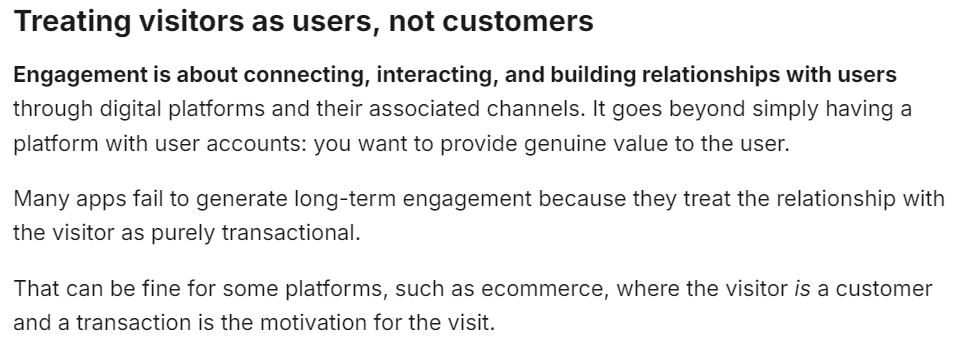
Excerpt from the User Engagement Blueprint - Maurik Willemse, 2026
So by reframing what we learned about “conversion” from the Ad and Analytics definitions provided by Google, we can say that :
“A conversion event is a specific action taken by a user that leads to more future engagement”
That’s conversion according to the User Engagement Blueprint
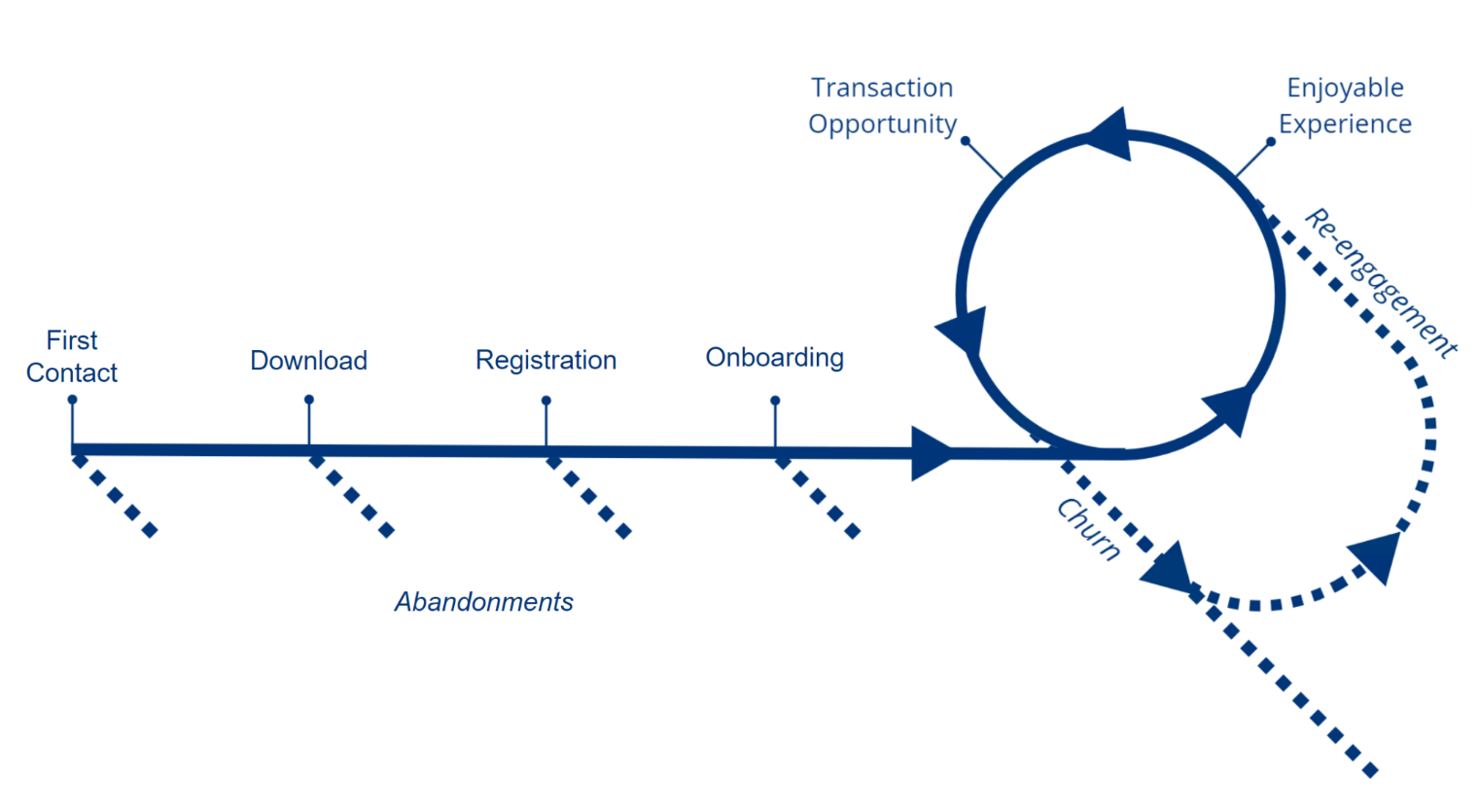
The engagement loop
This approach to conversion events, sets up the Engagement Loop from the User Engagement Blueprint.
On the diagram, each node marks a potential conversion event.
Since engagement is the ultimate goal; every other kind of conversion, including transactions, is a consequence of good engagement.
Each event in the onboarding phase (the line leading up to the loop), such as First Contact and App Install, leads on to future events.
So why is this important?
The reframing of engagement sets up the ability to become data-led (read: user-led).
It sets up the implementation of the KPI framework which I’ve talked about in another blog post called Why Did Users Stop Engaging With This Feature?
You can get more details in my User Engagement Blueprint, which ties together the 3 aspects of engagement, measuring performance and testing ideas.
So stop wasting time trying to force your users to transact instead of providing them with good experiences.
Get started now - get The User Engagement Blueprint for free